
Short answer: yes, you can memorize Bible verses in different translations. There is no major downside to memorizing different verses in separate translations. Most of the time I get this question because:
- Somebody has memorized a Bible verse as a kid in a particular version of the Bible but has chosen a different translation to use as an adult;
- Someone likes the wording of one translation for a particular verse but then another translation for a different verse;
While it can be challenging (and not necessarily recommended) to “re-memorize” a verse in a different translation, there are many good reasons to want to jump between versions of the Bible as you internalize different memory verses or passages.
This being said, if you want to retain them long-term without confusion, it helps to use one “home” translation as your anchor and only layer in other translations intentionally. Different translations can deepen understanding, but random switching can slow memorization if you don’t have a plan.
Here’s a practical framework you can use immediately.
Can I Memorize Bible Verses in Different Translations?
Can you memorize in different Bible translations? Yes. Should you? It depends.
Personally, I memorized the entire book of James in high school using the King James Version (KJV). As an adult, I’ve switched away from the King James Version and I use other translations for reading, study and memorization of new verses.
It would be extremely difficult for me to go back and re-write that KJV memory with the NIV, ESV or other Bible translation. Instead, the book of James remains in the KJV and any new passages that I memorize are done in a different translation.
There is no rule that says you must memorize all of your Bible verses in a single translation!
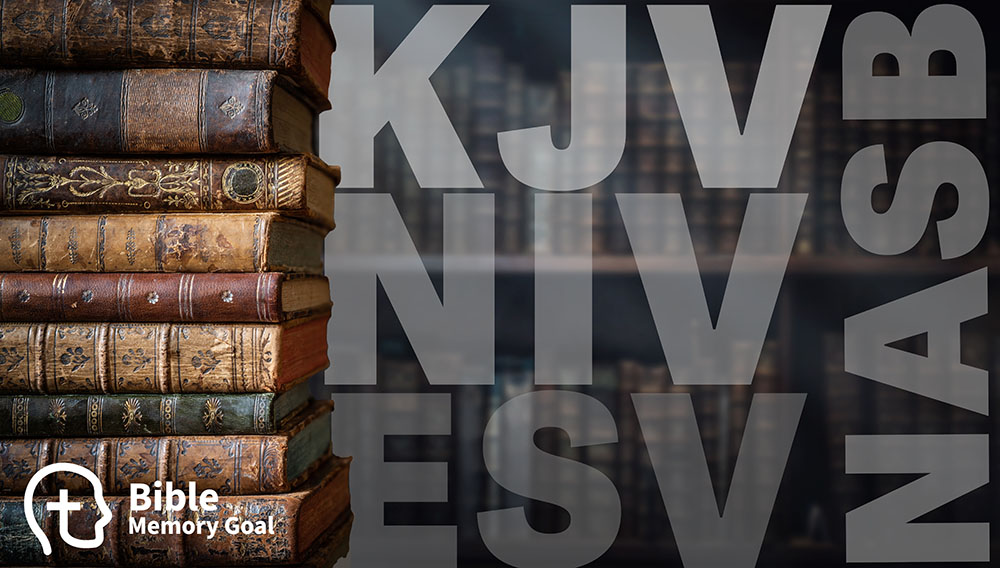
Many mature Bible memorizers take a similar approach. The key is structure:
- Choose one primary translation for your core memory system.
- Use secondary translations for study and clarity.
- Avoid mixing wording from multiple translations in the same early-memory phase.
Note: Your choice of Bible translation may also depend on your use case. Many translations are under copyright, which means that if you intend to recite the passage you’re memorizing or use it in any such manner that would require copyright permission, that’s worth considering.
Why This Question Matters
Translation choice affects rhythm, wording, and recall speed. If your wording keeps shifting, your brain has to re-encode the verse repeatedly. That is great for study, but not always ideal for initial memorization.
The value of internalizing God’s Word is the ability to meditate on it for years, if not decades to come.
Choosing a translation to memorize feels like a “permanent” choice, and in some ways it is, but thankfully God designed our brains to handle changes!
Bible Translation Strategy
In an effort to provide a more practical answer to this question of memorizing in different translations, here’s a Bible translation strategy that you can use or modify to fit your situation.
1. Pick a “Home Translation”
Use one translation (for example NIV, ESV, NKJV, etc.) as your default for memorization. Usually, this ends up being the same translation that you read and study from, but it doesn’t have to be.
It might also be helpful to understand which translation your church uses or your pastor preaches from, as this may influence which version you end up using at home.
This kind of “home translation gives you consistency in phrasing, cadence, and review.
2. Use Other Translations During Study
Before memorizing, as you’re attempting to understand the passage you want to internalize, it helps to compare 2–3 translations. This is true both in memorization and even as you study.
Sometimes one translation rolls off the tongue better than another. Sometimes the wording resonates with you more than another. That’s ok!
Take note of the different translations and then choose one version to commit to memory.
3. Add Alternate Wording Later
After the verse is stable in your memory, you can optionally learn the same verse in another translation for richer understanding.
In some cases, Bible studies that I’ve done later in life have informed my memory of a particular passage.
As an example, I memorized the book of Philemon and years later heard a sermon talking about the use of the Greek word koinonia in verse 6. This made such an impression on me that I added a gold coin (to represent koinonia) to my memory of Philemon 6 to remind me of this.
This is a unique example using the original Greek, but you can also adopt different wording from a various English translations that help you understand a verse better.
Benefits of Multiple Translations
There are benefits to using different translations for reading, study and memorization, such as:
- Clarifying difficult wording in one translation.
- Teaching others who use a different translation.
- Thematic study where wording nuance matters.
- Long-term growth after you already have a strong memory base.
However, it’s worth noting the ways in which this can also hold you back.
When Multiple Translations Can Hurt Progress
I do not recommend using multiple translations to memorize Bible verses in the following cases:
- You are new to Scripture memory and still building consistency.
- You are memorizing long passages (entire chapters and books) and you mix translations within the passage;
- You switch translations every few days with no clear system.
Final Takeaway
You can memorize in different Bible translations, but don’t start with complexity. Anchor your memory in one translation, build consistency, then broaden for depth or as you mature.
Ultimately, you should have a reason for choosing a translation to memorize. Be intentional and then give yourself grace. At the end of the day, the version you use isn’t as important as simply internalizing God’s Word. Period!



Leave a Reply